
 INSTRUMENT
PIERCING
INSTRUMENT
PIERCING
Instrument-Based Ear Piercing vs Traditional Methods: Which Is Better for Your Child?
June 29, 2026
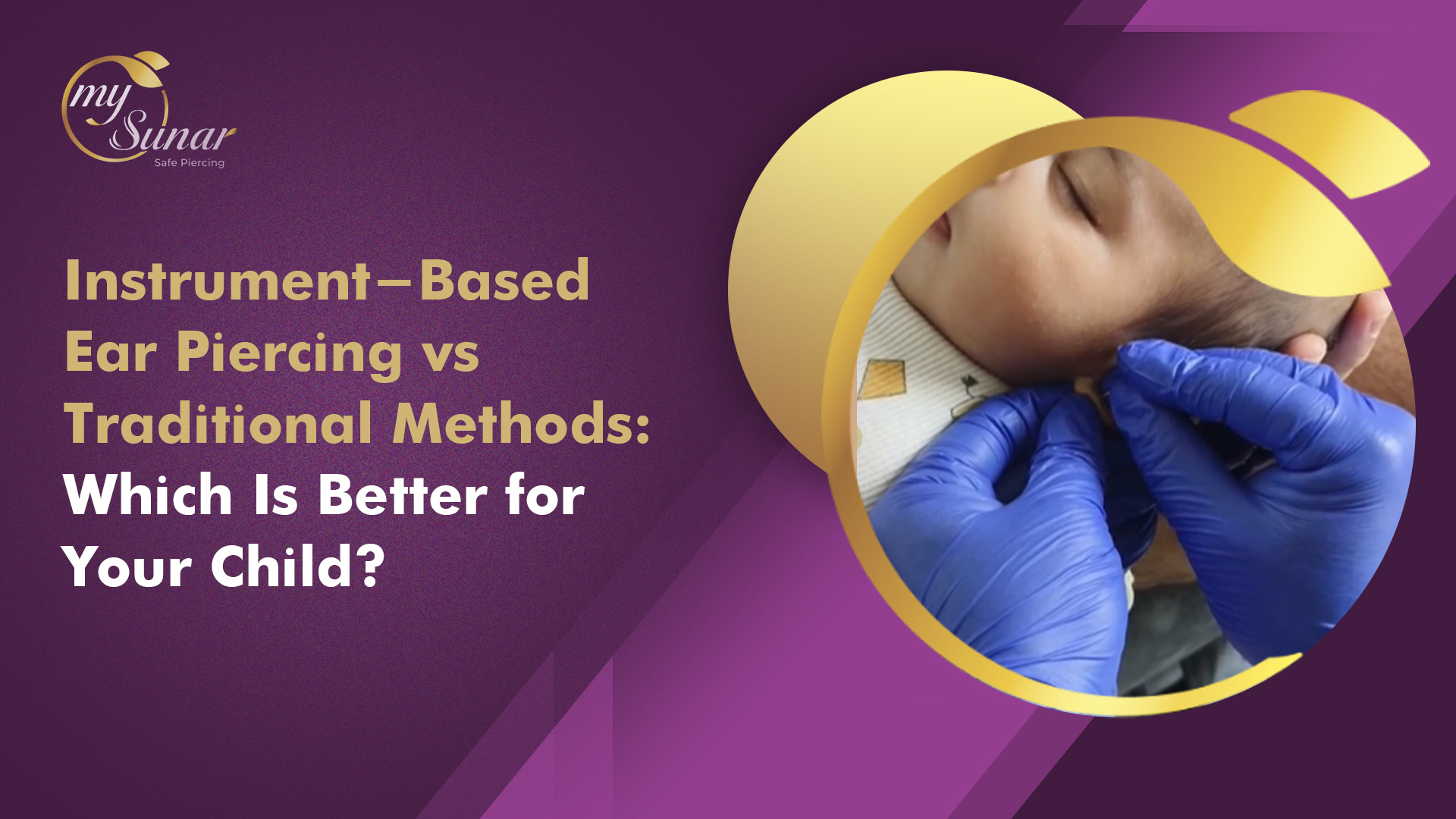
One of those questions you only think about after disaster strikes is What instrument pierced your baby's ears? Most parents know the answer to the location, but very few have an idea about the process involved. Lack of knowledge leads to many issues.
And it really matters! The difference between a piercing gun, needle, and spring-loaded instrument will leave a different result for the little one's ears. Healing process, chances of infection, and overall comfort levels vary dramatically.
This blog post contrasts instrument-based ear piercing ear piercing and regular piercings in preparation for your baby's procedure.
What Is Instrument-Based Ear Piercing?
Tool-based ear piercing is any kind of ear piercing which involves the use of a precise tool as opposed to manually forcing the tissue open. It encompasses both spring-type piercing tools as well as hand-held needles used by a professional piercer.
The main difference is the level of control. Pressure is applied evenly. No tearing of the tissue. Less trauma, less swelling, faster healing process.
The Problem with Piercing Guns
Piercing guns have taken over jewellery shops and mall kiosks all over India. They are quick and appear modern. However, this is not the case.
The gun forces the stud through the earlobe using spring-loaded pressure, thereby crushing the tissues instead of separating them. Thus, the piercing is done using the stud itself, causing more damage than needed.
Moreover, piercing guns cannot be autoclaved because the plastic components of the guns will melt when heated for sterilisation. Rinsing the equipment between procedures is not enough for children.
Benefits of Instrument Ear Piercing for Children
The advantages of instrument ear piercing immediately become clear when one compares results.
• Less painful for the child during the process, because it involves separation, not crushing, of the tissue.
• Minimal swelling within the first two days.
• Faster recovery period, normally between four and six weeks after.
• A lower risk of infection when using EO-sterilized earrings.
• A quieter procedure with no loud clicking sound that startles babies.
As a concerned parent trying to find ear piercing options for children, this list should mean a lot to you.
Signs of Infection Parents Should Watch For
Regardless of the technique chosen, parents should be aware of the signs of ear piercing infection in babies. Redness and sensitivity within the first two to three days are normal. However, if the condition worsens after day three, there may be an infection.
Indicators of an infection include redness spreading around the piercing area, the presence of pus, swelling that does not reduce, sinking in of the pierced earlobe, fever, or continuous crying. If your baby continues touching the ear piercing area, you should see a doctor.
Ear Piercing Aftercare for Infants
Proper aftercare lowers the risk of problems. Clean the area twice a day using the prescribed solution. Maintain hygiene by keeping the hands of your child clean. It is recommended not to remove the earrings for four to six weeks.
What is the duration for healing of baby ear piercing? Healing starts after four to six weeks, but complete formation of the internal passage may take six months. Have patience during the whole procedure. Changing earrings too soon is among the most frequent errors made by parents.
Best Earrings for Transitioning After Healing
After complete recovery, the ideal earrings after ear piercing should be made from certified precious metal materials that are lightweight and hypoallergenic. It's important not to opt for fashion jewellery or metals with plating that may irritate the skin.
The mySunar's JunEars range includes gold earrings with certification marks for their purity at 14 and 18-carat gold. These earrings do not contain nickel, palladium, or cobalt and have been made specifically for children going from piercing studs to normal earrings.
Conclusion
Instrument-based ear piercing provides a considerably superior result compared to piercing guns. This process will determine how much pain your child has to endure during the procedure, as well as how quickly they will recover from the piercing, and whether any infections may occur.
When seeking a safe ear-piercing process for kids, you can simply check off all the required items, such as using a controlled instrument, earrings sterilised in EO (ethylene oxide) that are nickel-free, an experienced person performing the job, and proper aftercare.
mySunar offers a traditional needle piercing performed by qualified Sunars in sterile environments right in your home in various cities.
FAQs
What is instrument-based ear piercing?
It refers to piercing methods that use a controlled, precision tool such as a fine needle or calibrated device, rather than a blunt-force piercing gun.
Is a piercing gun safe for babies?
Piercing guns crush tissue with blunt force and cannot be fully sterilised. They pose a higher infection risk for babies compared to needle-based methods.
How long does baby ear piercing take to heal with a needle?
Initial healing takes four to six weeks. Full internal healing of the piercing channel can take up to six months.
What should I do if my baby's ear piercing looks infected?
If you notice spreading redness, pus, swelling after day three, or fever, consult your paediatrician. Don't remove the earring without medical advice.
What earrings are safe for babies after the piercing heals?
Use lightweight, BIS-certified 14 or 18-carat gold earrings that are free from nickel and other allergens. mySunar's JunEars collection is made for this purpose.