
 INSTRUMENT
PIERCING
INSTRUMENT
PIERCING
Ear Piercing for Newborns & Young Babies (0 to 6 Months): Benefits, Safety & Aftercare
July 14, 2026
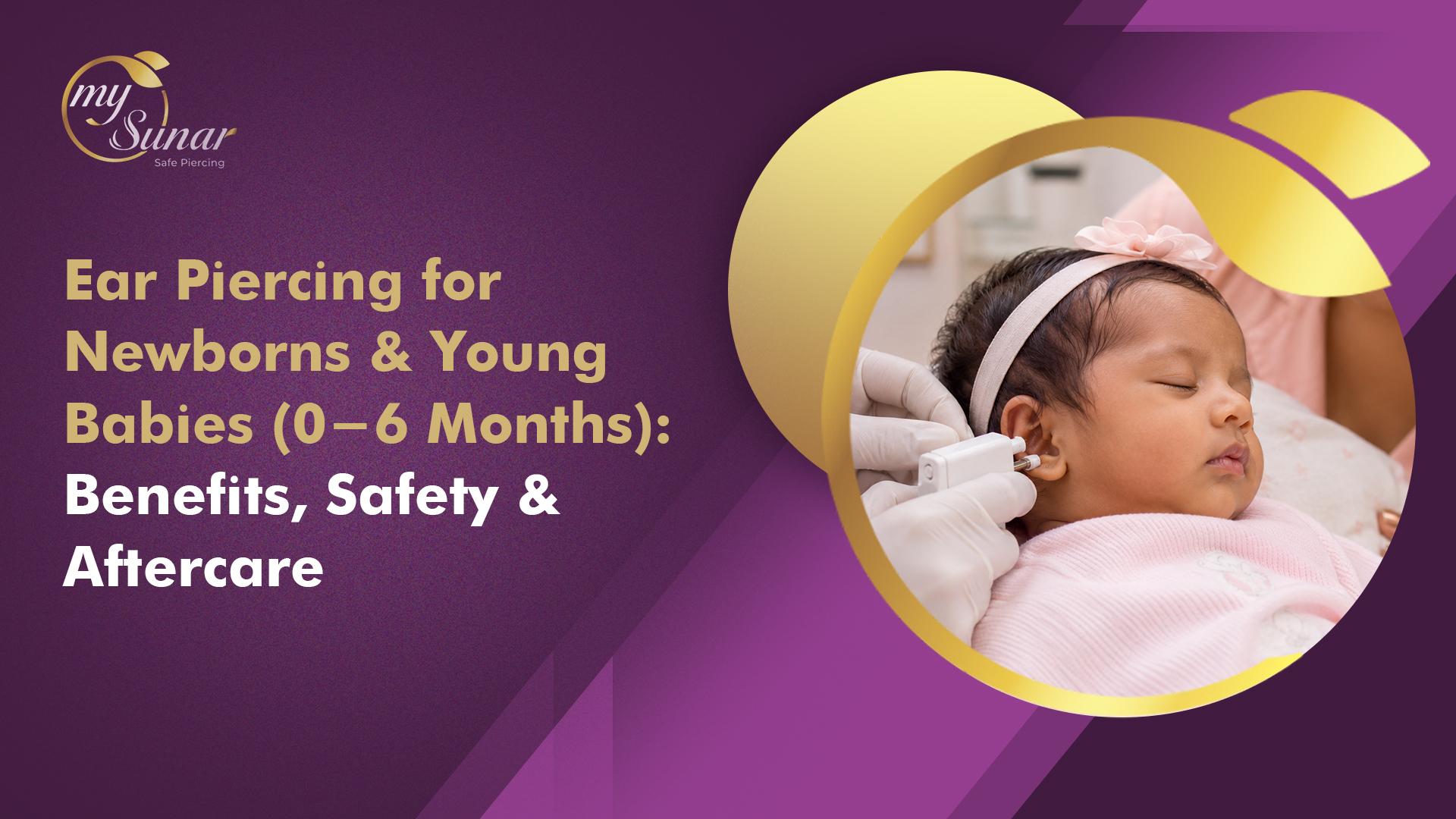
The first half year of your baby's existence is precious, tender and filled with achievements and changes. In between the first smile and the first venture into the big world, many parents start considering a sweet custom of first ear piercing for their baby.
But it is inevitable to think of some worries as a parent, too. Is the baby too young? Will it be painful? Can there be any infections, complications or problems with earrings? These are some of the things which should be answered with care.
This blog gives all the information that is needed by the parents regarding baby ear piercing when the child is still a newborn baby. From the right time of ear piercing to post-care that does not interfere with the feeding schedule of the baby, we will keep it simple and true.
Why Some Families Choose Early Ear Piercing
For many families across India and globally, ear piercing is not just cosmetic. It carries cultural, emotional, and even traditional significance. In several communities, it is performed as part of a naming ceremony or an early rite of passage.
There are also practical reasons parents consider the newborn stage. Babies at this age are less mobile and less likely to touch their ears, which means healing usually happens before curiosity kicks in. Recovery memory is minimal, so the experience is not something the child carries forward emotionally. Everyday routines like feeding, cuddling, and swaddling naturally support gentle aftercare without needing any big changes.
Whatever your reason, the decision should feel unhurried. A calm choice made in your own time is always the right one.
What Is the Best Age for Baby Ear Piercing?
Choosing the best age for baby ear piercing is something every parent wonders about, but the truth is it depends on the health and suitability of your child rather than time alone.
Pediatric advice recommends waiting for at least the completion of vaccination of your baby, which takes place at around the 3 to 6 month mark. At this stage, the baby's immunity will be better, the feeding patterns will be well established, and the ears will also be soft and pliable.
Some parents do this when their babies are 40 days old. This is mainly because of cultural reasons. But both are acceptable, provided it is done in a clean and hygienic environment. The important thing is that your baby should be healthy and free of any infection on that particular day.
How the Piercing Is Done at This Age
For newborns and infants, the process is designed to be quick, quiet, and as gentle as possible. A trained practitioner will assess the earlobes, mark the position with care, and use a sterile technique to minimise discomfort throughout.
At mySunar, the piercing is performed with pre-sterilised gold needles that are single-use and disposed of safely after each session. The practitioner works under a strict hygiene protocol, ensuring that every surface, tool, and hand movement follows a clean, controlled process.
The actual piercing itself takes only a moment. Most babies react briefly, then settle back into their parents' arms within minutes. Feeding your baby soon after can help soothe them and restore calm quickly.
Safety Essentials Parents Should Look For
Safety is not a single feature. It is a set of small, careful choices made throughout the process. Before you book an appointment anywhere, look for the following essentials:
• A clean, private, dedicated piercing area
• Single-use sterile needles, never reused piercing guns
• Pure gold studs suitable for delicate baby skin
• A trained practitioner with experience in infant piercing
• Clear aftercare instructions given to you in writing or verbally
A rushed or noisy environment is never suitable for a baby. Your instinct as a parent matters here. If something feels off, you have every right to pause, ask more questions, or walk away and reconsider.
Aftercare for Newborns: Gentle, Simple, Consistent
Aftercare in the 0-to 6-month stage is easier than most parents expect, largely because babies do not yet reach for their ears. The focus is on cleanliness, gentle handling, and quiet observation.
Key aftercare habits include the following:
• Wash your hands before touching the pierced area
• Clean the earlobes gently with the solution your practitioner recommends
• Avoid harsh soaps, powders, or oils near the piercing
• Turn the studs only if advised, and always with clean hands
• Watch for any redness, swelling, or discharge in the first two weeks
Most healing happens quietly in the background. A little redness in the first two days is normal. Persistent swelling, warmth, or fluid should be reviewed by a doctor without delay.
Feeding, Sleep, and Daily Care After the Piercing
There is no need to alter your child’s schedule after the procedure. The feeding pattern will stay the same, as well as the sleeping positions, although most parents find themselves putting their child to bed on his or her back for a couple of nights.
You can bathe your baby starting from day 24 after the piercing, making sure that you keep his or her earlobes dry after the procedure. Do not immerse your baby's ears in still water for at least 2 weeks. Your child needs to wear cotton garments that do not tug on the ears in the first few days.
Your baby won’t remember anything about the procedure. All he or she will remember is your presence and your voice. And that’s what really counts, and it works better than all the products out there.
mySunar Insight
For babies, the actual piercing is not as important as the surrounding environment. Based on our experience, there are actually three things that play an important role in how this will turn out. These include the peaceful environment, the steady hands of the practitioner, and the composed state of mind of the parents themselves.
Conclusion
Piercing your baby’s ears when it is still in the newborn stage is your own personal choice influenced by many things, including customs, timing, and confidence. There is no specific right age when it comes to piercing, but there is surely a right way to do it, with proper hygienic conditions, care, and skills.
If approached correctly, with a professional who understands how fragile a baby's skin is, and with an atmosphere prepared for such a procedure, the piercing becomes an experience of beauty. Your baby will be comfortably held and safe. This is what should be expected of any parent.
Whenever you feel like taking this step, at mySunar, we can guarantee a hygienic and comfortable atmosphere created specially for infants. We are here to assist you with every question so that your baby’s first piercing will become a sweet memory.
FAQs
1. What is the safest age for baby ear piercing in the first six months?
Many families choose the 3 to 6 month window, once initial vaccinations are complete, and the baby is feeding well. Your paediatrician can confirm readiness based on your baby's individual health.
2. Will the piercing hurt my newborn?
Your baby may cry briefly at the moment of piercing, but the sensation is short-lived. Most babies settle within minutes when held and fed soon after.
3. How do I know if the setting is truly hygienic?
Look for single-use sterile needles, pure gold studs, a clean dedicated area, and a trained practitioner. Any reputable service will happily explain its hygiene process to you.
4. How long does it take for a baby's ear piercing to heal?
Initial healing usually takes about four to six weeks. Full healing can take up to three months. Consistent, gentle aftercare speeds this along smoothly.
5. What should I do if I notice redness or swelling?
Mild redness in the first two days is normal. Persistent redness, swelling, warmth, or discharge should be reviewed by your paediatrician without delay.