
 INSTRUMENT
PIERCING
INSTRUMENT
PIERCING
Ear Piercing for Teens (11 to 17 Years): Choosing the Right Earrings, Placement & Aftercare
July 22, 2026
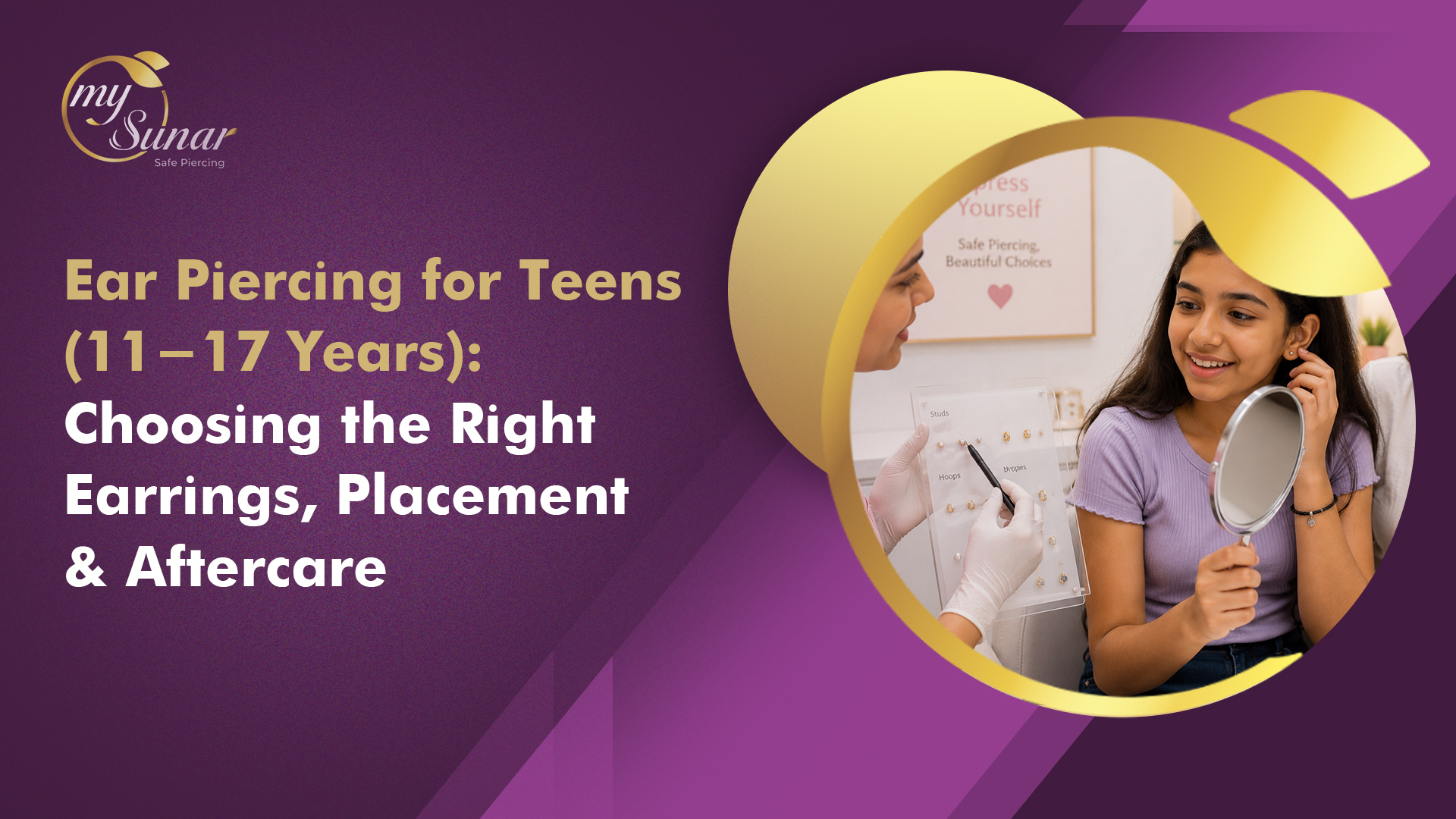
The teenage years are when one begins to find their identity. Music preferences change, friendships form, fashion becomes individualised, and self-expression takes on a new importance. For many teenagers, getting their ears pierced is not only about fashion. Rather, it is a subtle form of expression stating, This is who I am.
If your teenager has been pestering you for a piercing, or if you are a teenage reader discovering this page on your own, this guide has been prepared for both of you. This page provides information on popular piercings, choosing appropriate earrings, and how to care for your piercings while going to school, participating in athletics, or having a long night of studying ahead of you.
In other words, this ear-piercing guide for teenagers is open and responsible in addressing teen decision-making as well as respecting the desire of the parents to ensure safety. You do not have to choose sides. The right approach to a teen ear piercing encompasses both of you.
Why Teens Are a Different Audience
Teens are not children, and they are not adults. This in-between stage means they think about ear piercing differently than any other age group.
At this stage, teens usually have a clear sense of the style they want, and they care about how the piercing looks in photos and everyday moments. They are influenced by friends, social media, and personal aesthetics, and they want to feel respected as decision-makers. Even the most confident teen is often quietly nervous underneath, though they may not show it openly.
A good practitioner respects a teen's autonomy while still gently checking in on nerves. A good parent listens to their teen's preferences while quietly ensuring the setting is safe. This balance is the whole point.
Popular Placement Options for Teens
One of the most exciting parts of teen ear piercing is the range of placement options. Unlike a first lobe piercing in early childhood, teens often want more variety, and each placement carries its own look and healing profile.
Here are the most common choices to know about:
• Standard earlobe: classic, versatile, and the easiest to heal
• Second lobe: a small stacked look above the first piercing
• Upper lobe: a stylish spot that pairs beautifully with the standard lobe
• Helix on the upper cartilage: trendy but requires longer healing
• Tragus and cartilage variations: bolder statement piercings
For younger teens or first-time piercings, a standard earlobe is usually the smartest starting point. Cartilage piercings, while popular, take longer to heal and need more careful aftercare. A trained practitioner can guide the right choice based on ear shape, age, and healing capacity.
Choosing the Right Earrings for a Teen
The first pair of earrings after a teen ear piercing ear piercing matters more than most teens realise. Fashion is important, but so is comfort during healing. Pure gold is gentle on healing skin, and small, lightweight designs work best for the first few weeks.
Free-flowing dangles, sharp edges, and heavy hoops are best avoided until the piercing is fully settled. Choose backings that stay secure during sleep and sports, and keep designs simple enough to comply with school rules if that applies. Once the piercing is fully healed, teens can explore fashion earrings freely and start expressing their personal style with more variety. During the healing window, though, keeping it minimal and skin-friendly protects the piercing and speeds up recovery.
Preparing for the Appointment
Teenagers generally tend to feel comfortable being considered strong rather than weak. The preparation for this age bracket is all about accurate knowledge rather than emotional support.
An ideal way of preparing for a visit would be having a healthy meal before the appointment, ensuring one takes plenty of water to remain hydrated, and avoiding the consumption of energy drinks and caffeine that might lead to an increase in heartbeats. One should put on tops that do not require one to put his/her head through.
Teenagers generally tend to be more anxious than they appear to be. Conversing in a quiet tone while travelling to the place of the appointment without giving them lectures works better than anything else.
What Happens During the Piercing
At mySunar, the process for teens is professional, respectful, and unhurried. The practitioner will begin by discussing the placement, showing options, and answering any questions the teen has.
Sterilised gold needles are used, ensuring a clean and precise piercing. The earlobes or chosen area are marked carefully to match on both sides. The actual piercing takes only a moment, and most teens report the sensation as a quick pinch rather than lasting pain.
A parent can be present or wait outside based on the teen's preference. That choice alone can shift the whole experience. Being treated as someone whose opinion matters is often what teens remember most.
Aftercare for a Busy Teen Life
Teen schedules are packed. School, tuition, sports, social lives, and endless screens leave little time for detailed aftercare rituals. The good news is that aftercare does not need to be complicated.
A realistic aftercare routine includes the following:
• Clean the piercing twice a day with the recommended solution
• Wash hands before touching the ear at any time
• Avoid earphones that press directly on the piercing area
• Skip swimming pools and long showers for at least two weeks
• Sleep on the opposite side for the first few nights
Sports can usually continue after a few days for lobe piercings. Cartilage piercings may need a longer break, especially for contact sports. Practical, honest aftercare that fits into a teen's real life is far more effective than a strict routine they will not follow.
Placement, School Rules, and Style Balance
Ear piercings have certain requirements in many schools; therefore, it is advantageous for teenagers and parents to learn about school requirements before booking. In some cases, only a single earlobe piercing is allowed, while in other cases, cartilage piercings will have to be covered while attending school. Studs will be the safest choice initially since uniforms for certain sports will require that the earring be taped down or taken out. Photo days have special requirements for studs, too.
This is not meant to discourage teenagers at all; it will just make things easier for the timing, placement, and initial studs. Holiday breaks at school can be great for having the time to heal before school starts again.
Talking About Trust, Not Just Rules
Ear piercing is only one of many small experiences during which teens get an opportunity to make decisions regarding their own bodies. The way you handle such situations will determine how further talks regarding health, style and personal decisions will take place.
The parents who handle such situations with respect, guidance, and trust have a much easier experience with their teenagers in other respects. The adolescents whose personal preferences are respected tend to make better decisions in crucial moments.
Teenagers, please understand that choosing proper surroundings for piercing is a sign of maturity. Parents, please remember that helping without being too controlling is the best gift you can give your children at this age.
mySunar Insight
The teens who ask the most questions during their visit are almost always the ones who follow aftercare the best. Curiosity, we have learned, is not a sign of nervousness at all. It is a quiet form of ownership. That shift is what makes the piercing feel truly theirs.
Conclusion
In teenagers' piercings, style, self-expression, and trust blend to create something more than what meets the eye. When done carefully, a piercing will become an important part of those special years of their life, rather than simply being a style statement.
The right location, the right earrings, and proper after-care are what make the difference. Equally important is the atmosphere of respect for the teenager, which listens to them and answers their questions.
If your teenager is already prepared to get his/her piercing, or if you are a teenager and wondering about your future piercing, then we invite you to come to our store, mySunar, where every visit is taken seriously, and style and safety are combined.
FAQs
1. What is the best first piercing spot for a teen?
The standard earlobe is the easiest to heal and works with almost every style. It is a smart, low-maintenance starting point before exploring cartilage or upper-ear piercings.
2. How painful is a cartilage piercing compared to a lobe piercing?
Cartilage piercings feel more intense than earlobe piercings and take longer to heal. Most teens describe it as sharp for a second, followed by mild tenderness for a few days.
3. Can teens still play sports after a piercing?
Lobe piercings usually allow most sports within a few days. Cartilage piercings may need a longer break, particularly for contact sports where the ear can get knocked.
4. Are gold earrings really better for healing?
Pure gold is gentle on healing skin and reduces the risk. It is a widely trusted choice for fresh piercings, especially for teens with sensitive skin or allergies.
5. What if a teen wants a piercing but a parent is unsure?
An honest conversation about safety, hygiene, and placement helps both sides. Visiting a trusted practitioner together often turns hesitation into a shared, positive decision.