
 INSTRUMENT
PIERCING
INSTRUMENT
PIERCING
Why Babies Pierced Traditionally Heal Faster Than Those Pierced Mechanically
January 28, 2026
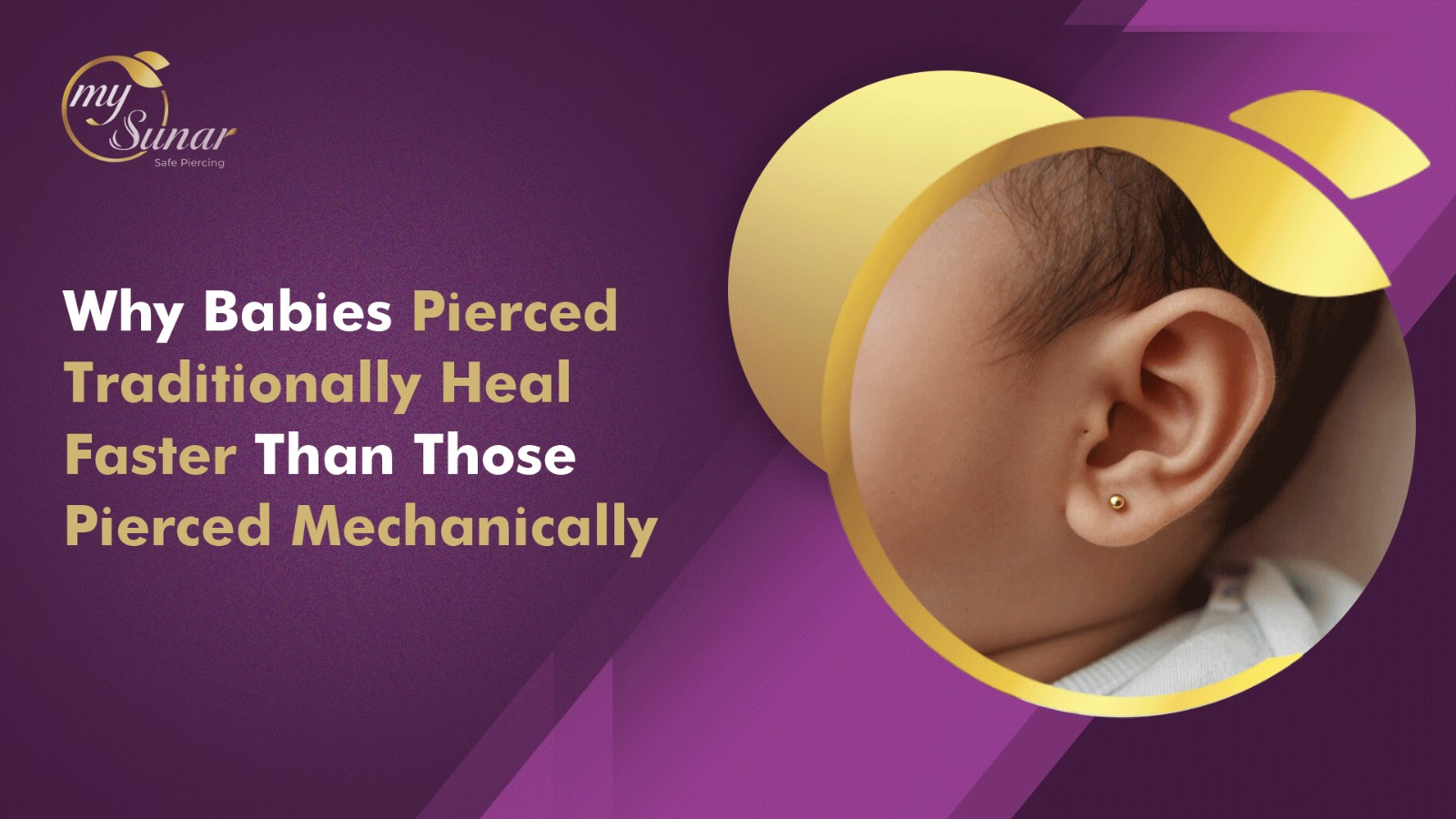
If you are a new parent, let us start with a simple question.
Have you ever wondered why some babies heal quickly after ear piercing while others struggle with redness, irritation, or prolonged discomfort?
It is not luck. And it is not just about aftercare. The piercing method itself plays a much bigger role than most parents realise.
A lot depends on how your baby's ears are pierced in the first place.
In Indian families, ear piercing has always been a meaningful tradition. But today's parents often find themselves choosing between traditional needle piercing and mechanical or gun piercing. Both may look quick on the surface, but when it comes to your baby's healing, the difference is significant.
Let us talk about why.
Your Baby's Skin Is Not Like Adult Skin
This is something many parents do not realize at first.
A baby's skin is thinner, softer, and far more sensitive than an adult's. Even a small amount of pressure or trauma can lead to swelling or delayed healing. That is why baby ear piercing needs a completely different approach.
Mechanical piercing relies on spring-loaded force to push a stud through the earlobe. Though fast, this method prioritises speed over delicacy.
Traditional piercing, by contrast, is guided by control, precision, and experience — qualities that matter greatly when working with newborn skin.
So, How Does Traditional Piercing Help Faster Healing?
Let us break it down simply.
Traditional Sunars use a fine, sterile needle guided by years of hands-on experience. This creates a clean, precise opening instead of forcing jewellery through soft skin.
There is no sudden pressure. No shock. No unnecessary trauma.
Because the skin is not damaged around the piercing site, the body heals naturally and faster. Parents often notice that babies settle down quickly after traditional piercing, with minimal redness and discomfort.
What Happens with Mechanical or Gun Piercing?
Now, let us talk honestly about gun piercing.
While gun piercing may appear quick, the force involved does not adjust to a baby's delicate earlobe. This can lead to micro-tears, swelling, and delayed healing — issues that show up days later.
For adults, this may not be a big issue. For babies, it can mean slower healing, irritation, or even discharge after a few days. Many parents only realize this later, when the ear takes longer to heal than expected.
This is why many paediatric professionals and experienced practitioners discourage gun piercing for newborns and infants.
Pain, Shock, and Emotional Comfort
Here is something parents feel instantly.
Mechanical piercing comes with a loud clicking sound and sudden pressure. That unexpected shock can scare a baby, even if the pain itself is brief.
Traditional piercing is quiet. Calm. Controlled.
The baby experiences a brief pinch-like sensation, and that is it. No loud noises. No startling movement. This gentle approach helps babies stay calmer, which also supports faster healing.
And let us be honest, when the baby is calm, parents feel calmer too.
Cleanliness Always Comes Before Speed
Some people assume mechanical piercing is safer because it is quick. But cleanliness matters far more than speed.
Traditional piercing places strong emphasis on hygiene. Sterile needles, clean hands, fresh gloves, and careful handling are non-negotiable steps. This significantly lowers the risk of infection, which is especially important for babies whose immune systems are still developing.
Mechanical tools, if reused or not sterilised properly, can carry bacteria. Even minimal exposure can cause complications for infants.
Why Home-Based Traditional Piercing Helps Healing
Let us ask you this.
Where does your baby feel safest?
At home, of course.
Traditional home-based piercing allows the baby to remain in a familiar, calm environment. There are no bright lights, loud sounds, or unfamiliar faces. Parents can hold their baby comfortably, which keeps stress levels low.
A relaxed baby heals better. It really is that simple.
Earrings Matter More Than You Think
Healing is not just about the piercing method. It is also about what stays in the ear afterward.
Traditional Sunars prefer hypoallergenic gold earrings that are lightweight and gentle. Gold is naturally skin-friendly and reduces the risk of allergies or irritation. Proper baby studs also stay in place without pulling or moving unnecessarily, which helps the piercing heal smoothly.
Standard studs used in mechanical piercing are not always designed with babies in mind, and this can slow down healing.
Making the Right Choice for Your Baby
As parents, every small decision feels big. Especially when it involves your baby's comfort and safety.
Traditional ear piercing offers a thoughtful balance of gentleness, hygiene, emotional comfort, and faster healing. It is not just a tradition passed down through generations. It is a method rooted in understanding babies.
A Calm Start to a Beautiful Milestone
Your baby's first ear piercing should feel special, not stressful. With traditional piercing, healing is quicker, discomfort is minimal, and the experience feels calm for everyone involved.
If you are looking for a safe, gentle, and trusted way to pierce your baby's ears at home, visit mySunar and choose a baby-first approach backed by experience, tradition and care.